Thursday, 25 September 2014

HOW SHOULD WE WASH OUR FACE

Washing your face seems pretty simple but you will be amazed at how many people are doing the wrong thing.....

Environ Skin Care Products

1) Wash Face With Clean Hands

Don't be surprised how many people don't clean their hands before cleansing their face. So wash your hands first, then wash your face to avoid rubbing all the dirt from your hands into your face.

2) Wash Twice Daily

Over washing the face can lead to irritation and lack of moisture. We should wash our face twice a day: in the morning and once again at night before we go to bed. Make sure to rinse any cleanser off completely, residue can lead to irritation and dryness. It is good to use lukewarm water to rinse our skin, if the water is too cold or too hot it can cause dehydration.
If your skin is oily it is better to soak up the excess oil with a tissue rather than washing your face more often.

3) Pick a Right Cleanser

Depending on your skin type, you should pick a pH-balance cleanser that suits your face. Most cleansing products have a surfactant, a chemical or natural compound that helps break through the surface tension of the skin. The cleanser absorbs dirt and oil and removes them during rinsing. Make sure ingredients list does not contain fragrance, parabens or harsh soap. Never-ever use soap to wash your face.

4) Don't Over Exfoliate

Do not over exfoliate the skin by using harsh grains. Many exfoliators contain sharp crystals made from particles of apricot pits or nuts that can cut into the skin causing irritation and inflammation. Be gentle to the skin by using a gentle scrub made from rice or enzyme exfoliant so don't cause damage to the skin. Depending on the exfoliant you may be able to use it everyday or as recommended by the product instructions.

Lastly, always put on a suitable moisturiser after wash to prevent dehydration.

HAPPY WASHING !

Tuesday, 12 August 2014

HS&P MESO Treatment (Skin Needling)


Collagen Induction Therapy Treatments CIT
HS&P MESO Treatment is 100% Natural! There is nothing injected into the skin. Allergic reaction and side effects rarely exist. Needles are working in thedermis layer of the skin and bring an immediate reaction from the brain to the skin. Your body produces more and more
collagen to plump the wrinkles, smooth and reduce existing scars.

The objective of HS&P MESO treatment is to stimulate collagen and elastin production and may enhance the penetration and absorption of active ingredients into the deeper layers of the skin. Therefore, additional age-fighting skin benefits can be achieved when combined with products that contain collagen-boosting and skin-fortifying ingredients like Retinol, Vitamin C and Peptides.

HS&P MESO is suitable for all skin types. Depending on the area of the face being treated, the procedure is said to be well tolerated and in some cases virtually painless, feeling just like a mild prickling sensation. The skin will be pink or red in appearance for a couple of hours following the treatment, much like a mild sunburn. The skin may also feel warm, tight and itchy for a short while. This should normally resolve in 12-48 hours. Side effects or risks are minimal with this type of treatment and typically include minor flaking or dryness of the skin, approximately 3 days after your treatment. After the skin has shed, it will have a healthy glow, feel softer, smoother and look more even in colour.

The benefits of HS&P MESO treatment are:

  • Reduces the appearance of fine lines and wrinkles
  • Improves skin contouring and skin tightening
  • Reduces pore size and improves skin texture
  • Reduces the appearance of any kind of scars except keloids or raised scars, red scars and scars that are too fresh after surgery or an accident.


Differences between HS&P MESO and traditional NEEDLE ROLLERS:

  • HS&P MESO utilises sterile packed, disposable needles that eliminate the risk of cross contamination and infection.
  • HS&P MESO is a patented Rectilinear Motion Stimulation Device and Protocol, which only allows needles to hit the skin at right angle without tearing the skin, hence avoiding the risk of skin damage or scar tissue formation compared to the traditional needle rollers.
  • The HS&P MESO device unique “press and go” treatment protocol will prevent scarring and scratching of the skin during the treatment unlike other needling methods.
  • The HS&P MESO device is designed with a safety depth controlling perimeter around the needles which will prevent the operator from applying too much pressure which may cause excessive trauma on the skin.
  • Compared with the traditional needle rollers, this unique HS&P MESO device has a specially designed Pine Leaf needle shape head for less trauma, less pain, and can easily target delicate skin such as the eye area, or areas that need to be isolated with better results.
  • The area can be covered more thoroughly with HS&P MESO than with traditional needle rollers, due to the 12 micro needles and the 83 times per second that the needle cartridge works on the skin. Also the device operates at high speeds which reduces the perception of pain.

At Skin Nexus we use a HS&P Meso Device for our Collagen InductionTherapy (CIT) Treatments, so you can be confident to receive the best and less traumatic rejuvenation therapy.

Friday, 27 June 2014

What causes pigmentation and how can it be treated?


There may be many different causes for pigmentation. The most common being hyperpigmentation from sun damage.

Sun Damage

Most of the sun damage is done during our childhood and adolescent years but it doesn't manifest until later in life. Freckles and brown or sun spots are a result of sun damage.

In an effort to protect the skin from the damaging UV rays the body produces excess melanin in the deep layers of the skin. Over time this melanin moves to the surface creating visible pigmented areas.

To treat this kind of pigmentation, a combination of more than one, of the following treatments is recommended:

Daily Skin Care:

A salon recommended skin care range specifically formulated for pigmentation or that contains high levels of vitamin A.

IPL or Laser:

Intense Pulsed Light (IPL) or Q-switch lasers can treat hyperpigmentation by burning the pigment without damaging the surrounding skin. The pigmented area will turn dark and may lightly scab 1 or 2 days after treatment. The scab will fall off in 1 or 2 weeks. It is important not to scratch or pick at the scab and avoid sun exposure and solariums. Deeper pigmented layers will rise to the surface and must be treated again. It usually requires 2 to 6 treatments. Treatments are spaced every 4 weeks.

Skin Peels:

Superficial skin peels with glycolic acid, salicylic acid, or lactic acid can also be used in combination with some of the other methods to enhance the results.

Daily use of a broad spectrum UVA & UVB sunscreen is paramount to avoid further sun damage. It is also recommended to wear a wide brimmed hat for long periods under the sun.

Melasma

Another cause for pigmentation is Melasma. Melasma affects mainly dark skinned people and is more difficult to treat. It often occurs during pregnancy and it is caused by hormonal changes. Because Melasma usually resides in the deep layers of the skin more aggressive treatments are needed. To effectively treat Melasma it may be recommended to combine all of the treatments bellow.

Daily Skin Care:

A daily skin care programme with high levels of vitamin A

Chemical Peels:

Stronger chemical peels that can penetrate to the deep layers of the skin as well as dermabrasion can also help.

Elos IPL:

Elos IPL which combines IPL and RF (radio frequency) may also work, however it may require multiple treatments. IPL is set low to avoid burning of the surrounding skin. The IPL energy creates a path of low resistance for the RF which is not colour dependant.

Hydroquinone Therapy:

Hydroquinone therapy it is also quite effective for the treatment of Melasma. Hydroquinone is a bleaching agent that decreases the production of melanin and breaks down the melanosomes (pigment granules of the skin's pigment cells). Hydroquinone cream is applied topically to the affected area only.
Again the use of a broad spectrum sunscreen is essential.

Post-inflammatory Hyperpigmentation

PIH (Post-inflammatory Hyperpigmentation) is also a frequent cause of pigmentation. In PIH an injury in the skin causes excessive pigment production. The most common causes are acne, burns, and psoriasis and they are more often found on dark skinned people.

PIH treatment is also quite difficult because it involves a deeper layer of the skin. Treatment options are the same as in Melasma (see above).

Thursday, 19 June 2014

Sugaring Paste VS Hot Wax


PURE AND NATURAL INGREDIENTS
Sugaring hair removal Melbourne
APSugaring paste is made from NATURAL INGREDIENTS with no testing on animals and with no harmful side effects caused by allergic reactions. It is so natural you can eat it!
Hot Wax has many chemical ingredients, mostly resins and preservatives.

IT IS NOT AS HOT
AP Sugaring paste is applied at body temperature making it safe for ALL AREAS even for spider veins and vericose veins.
Hot wax must be heated to a very high degree in order to become liquefied. This amount of heat can cause burning and scarring.

IT IS EASY TO CLEAN UP
Sugar can be easily cleaned with water – from both your client and your equipment. Clients never feel sticky after treatment.
Hot Wax contains resins, chemical solvents are required to remove it from the floor, equipment etc, which can be costly to replace. After waxing, the client usually feels sticky.

IT WILL NOT STICK TO THE SKIN
Sugar cannot adhere to live skin cells. Live cells are wet, and because sugar is water soluble, it will not adhere to live skin cell. It will extract the hair and exfoliate the dead skin cells, helping to free ingrown hairs. It's also safe on dry itchy eczema and dry psoriasis. It is gentle enough to go over the same area several times when necessary to extract the shortest and most coarse hair, without causing skin damage and irritation.
Wax has been known to remove more than just the hair, since it can adhere directly to live skin cells, which make waxing painful and irritating. Wax cannot be applied to an area more than twice at the most.

IT IS MORE COST EFFECTIVE
AP Sugaring paste can be used over and over on different parts of the body and is discarded after each treatment.
Wax can be more costly due to constant dipping for each strip applied.

IT NEVER DRIES
Sugar will not dry, so you can work over an entire area without ever dipping and stripping.
Most waxes must be removed immediately before they dry. This means repetitious dipping and stripping, making the process longer than necessary.

IT WILL NOT BREAK AS MANY HAIRS
AP Sugaring paste wraps around the hair shaft making it pliable, while seeping below the mouth of the follicle and lubricating the hair to make the extraction more complete and gentle. The hair is eased out of the follicle only in the natural direction of growth, which help to extract the hair intact.
Waxing can leave 15-30% breakage behind due to wax hardens on the hair, it has the tendency to break it off at the surface, rather than pull it out.

CAN EXTRACT VERY SHORT HAIRS
AP Sugaring requires less than 1/16 inch or four to seven days growth, after shaving.
Wax products require at least two to three weeks growth before treatment when a client is shaving.

LEADS TO PERMANENCY
After a number of treatments the hair follicle begins to deplete. The hair growth is more fine each time. Because sugar can extract the shortest hair, it is possible to extract hair in the early anagen phase, which can lead to permanency.


Wednesday, 21 May 2014

Everyday habits that can damage your bones

There a number of small things that we do or don't do everyday that contribute to damaging our bones and causing osteoporosis:

http://healthwill.blogspot.com.au/2011/07/healthy-bone-osteoporosis-free.html

1.  Soft Drinks

Soft drinks contain Phosphoric Acid which reduces the absorption of calcium.

2.  Drinking Alcohol

Alcohol reduces the absorption of calcium and vitamin D as well as destroying the bone making cells.

3.  A Sedentary Lifestyle

Without exercise the bones weaken and loose density. Walking and a daily routine with light weights can help keep the bones healthy.

4.  Smoking

Smoking interferes with healthy bone creation and decreases your bone mass.

5.  Not Enough Vitamin D

Vitamin D is essential for bone formation. The body makes vitamin from the sun, unfortunately ultraviolet light causes skin cancer and premature ageing.  It can also be difficult to get enough sun during the winter. You only need 10 or 15min of daily sun exposure in your face and arms, preferably early in the morning or late afternoon. If you are not getting enough sun, a vitamin D supplement is recommended.

6.  Not Enough Calcium in your Diet

You need to eat calcium reach foods such as milk, cheese, almonds, spinach, beans. You can also take calcium supplements.

7.  Drinking too much Coffee

Coffee increases the excretion of calcium through the urine and causes bone demineralisation.

8.  Not Enough Sleep

Lack of sleep reduces the mineralisation of the bones and increases the chances of osteoporosis.

9.  High Heels

Wearing high heels every day deforms your spine and can cause damage to your hips, knees, and feet.

10. Fluoride

Water with high amounts of fluoride cause a bone debilitating disease called Skeletal Fluorosis and makes your bones prone to fractures and arthritis.

Monday, 14 April 2014

Skin Rejuvenation - Radio Frequency

Radio Frequency (RF) is a rate of oscillation which corresponds to the frequency of electromagnetic waves (radio waves). It is widely used in medicine and has been used for rejuvenation for over 12 years.


RF energy gets converted to heat when it hits the deep layers of the skin. By heating up the water and protein in our skin RF helps to rebuild the collagen matrix and stimulate elastin production.

Benefits of Radio Frequency treatments:

    • Tightens lax skin
    • Promotes collagen production
    • Improves skin texture
    • reduces fine lines
    • stimulates blood circulation
    • increases skin elasticity
In most cases there is very little or no pain and no downtime and you can return to your daily activities right away.

Some skin tightening can be noticed immediately after treatment with the results improving within the following months as new collagen is produced.

Radio Frequency Devices

There are a few different radio frequency devices:

Monopolar

In monopolar devices the energy runs from the treatment head to a ground pad located on a distant part of the skin. The energy can penetrate up to 20mm deep.

Thermage™ is the best sample of monopolar RF device. Was also the first RF treatment in the market.

Thermage tends to be quite painful and often the skin becomes red and blotches and bruises may appear after treatment. They usually clear within a few days.

Bipolar

Bipolar Radio Frequency devices feature the two poles in the one hand-piece, the energy penetrates between 2mm and 4mm into the skin making it safer to use because it controls the energy between the two poles and confines it to the deep layers of skin.

Multipolar

Multipolar devices combine a different number of bipolar and monopolar systems.

So far, it has not been scientifically established which system offers the best option for skin tightening.

Bipolar RF with IPL

The Elos system combines bipolar radio frequency with intense pulsed light to deliver more effective treatments for a number of skin concerns.

This system can also target pigmentation, broken capillaries and acne scars at the same time that stimulates the collagen production and tightens the skin.


Side Effects of RF

The original protocols use very high energy settings with the area being treated in only one pass. Although very effective, there were many side effects some minor, such as redness and bruises which would clear in a few days; and some mayor such as blistering, burns, and fat atrophy.

Fat atrophy happens when the underlying layers of the skin are overheated causing a depression and giving a sunken appearance.

New treatment protocols use low-energy settings and multiple-pass. These protocols make the treatments extremely safe, with very little or no pain, and no downtime. The only side effect being a mild redness in some cases.

Low energy and multiple passes have proven to be even more effective than the original protocols with 87% of patients noting immediate skin tightening and 92% reporting skin tightening over the following 6 months.


What can I expect when going for a Radio Frequency Treatment?

The procedure will vary depending on the device being used.

For Thermage and monopolar devices a topical anaesthetic cream may be applied to the area to numb it.

You will be fitted with a self adhesive return pad to your stomach or back.

Depending on the energy level to be used a treatment grid ink transfer may be applied to your skin to guide the operator and avoid treating the same area more than once.

On bipolar devices using low-energy, multiple-pass the anaesthetic cream is not necessary, neither is the return pad or the treatment grid.

The therapist will start by cleaning your skin from any makeup and oil.

She will then apply a cooling gel to your skin to help guide the handpiece and make the treatment more comfortable.

She will start treating each area by sliding the headpiece with circular and uplifting motions. You will fill a warm sensation. There is usually no pain, however in sensitive areas where the skin is close to the bone you may experience like the flick of a rubber band.

At the end of the procedure a cooling lotion or masque may be applied.

How many treatments do I need?

For greater results 4 to 6 treatments are usually recommended. Treatments are spaced between 2 and 4 weeks.

The effects of the treatment can be seen right away with the skin continuing to improve during the following months.


Monday, 7 April 2014

Head Mites - They can be the cause of your hair loss

Like many women over 40 and 70% of men, my hair has started to thin out on the top.

Actually that is not quite accurate. There is an area on the top/back of may head where the hair has been thinner than the rest since I was a teenager. My hair is naturally thick and abundant so it was not so noticeable. When I consulted a dermatologist, she sent some blood tests asked questions about my parents and grand parents hair and concluded that it was unlikely that it would extend and that the only treatment that worked for such conditions was taking some hormone medication that she didn't recommend because of side effects.

My hair remained unchanged for many years, but now the thinning out has extended to the top of my head. I still don't like the idea of taking hormones, so after an acquaintance recommended it because it had given her great results, I have started using Environ's Intensive Hair & Scalp Tonic. I still cannot talk about results because it has been only a few weeks and most of those treatments take a few months to start showing results.
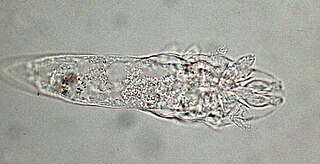
http://upload.wikimedia.org/wikipedia/commons/thumb/8/8c/Demodex-whole-mite.jpg/320px-Demodex-whole-mite.jpg
Demodex Mite - Photography by Alan R Walker

A couple of weeks ago, I was at the Salon Expo in Melbourne and because I was keeping my eyes open about anything to do with hair loss treatments, I came across a stand that claimed that hair loss could be caused by a microscopic mite that lives in our pores eating sebum.

I didn't quite believed it because I thought if it were true I would have heard of it by now. I seems I was wrong.

There are two species of head mites or Demodex that live on humans:  Demodex Folliculorum and  Demodex Brevis. They pass most of their time with their heads burrowed into our hair follicles. They are mostly found on our faces: cheeks, chin, nose, eyelids and forehead; however, they can live in any part of our skin.

Demodex prefer oily skin and their numbers increase in the summer months. They have a clawed mouth (palpus organ) and eat the sebum in our pores as well as the cells that line the inside of our follicles.

Only a small percentage of kids have Demodex, but by the time you are 80 there is an 80% chance that you will have Demodex. They are also more abundant in people with immune system deficiencies or that are taking drugs that affect their defences.

It is believed that Demodex activity, either directly or indirectly, may be the cause of many skin affections such as rosacea, acne and hair loss. There are very few studies and although there are many products that claim to kill Demodex, reviews are mixed.

Here is a list of links to products and home recipes that may help eliminating or controlling Demodex:

Tea Tree Oil
Kwellada
ZZ Cream
Sea Buckthorn Oil